Concrete surfaces are exposed to rain, sunlight, moisture, foot traffic, and everyday use throughout their service life. Without surface protection, exterior concrete can gradually become more difficult to maintain and may show signs of surface wear, fading, or staining over time. Concrete sealers are commonly used to protect decorative concrete surfaces, including driveways, patios, pool decks, walkways, entryways, stamped concrete, decorative concrete overlays, colored concrete, and other residential or commercial concrete surfaces. Understanding how concrete sealers work and the different types available can help you choose a product that matches your concrete surface and project requirements.
What Is a Concrete Sealer?
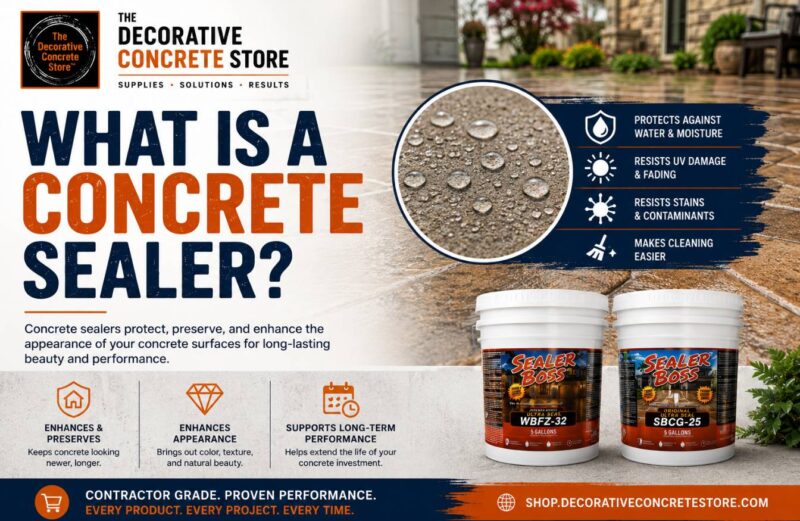
A concrete sealer is a protective treatment applied to the surface of concrete to help reduce the effects of moisture, weather exposure, stains, and everyday wear. Depending on the type of concrete sealer, it may also preserve the appearance of decorative concrete while making routine cleaning and ongoing maintenance easier.
Unlike bare concrete, which readily absorbs water and other contaminants, sealed concrete has an added layer of surface protection that limits water penetration and makes the surface easier to maintain. Concrete sealers are commonly used on driveways, patios, pool decks, walkways, entryways, garage floors, stamped concrete, decorative concrete overlays, colored concrete, and other residential or commercial concrete surfaces.
How Does a Concrete Sealer Work?
Concrete naturally contains small pores that can absorb water and other contaminants. Depending on the type of concrete sealer, the product may form a protective layer on the surface or penetrate the concrete to help reduce moisture penetration. This added layer of protection helps make routine maintenance easier while preserving the appearance and condition of the concrete over time.
Why Is Concrete Sealed?
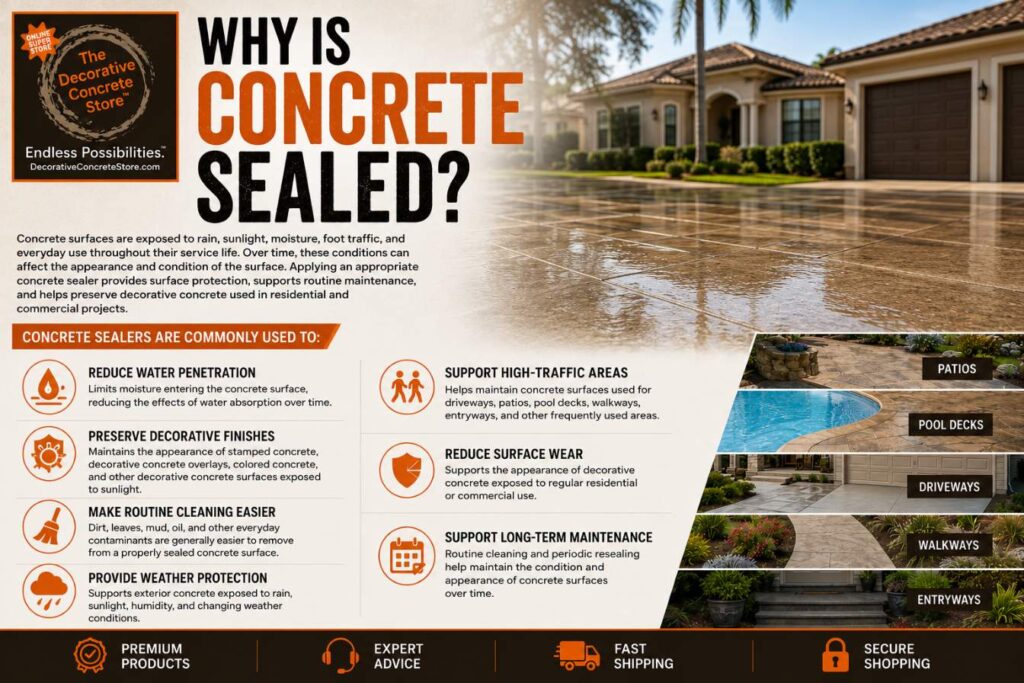
Concrete surfaces are exposed to rain, sunlight, moisture, foot traffic, and everyday use throughout their service life. Over time, these conditions can affect the appearance and condition of the surface. Applying an appropriate concrete sealer provides surface protection, supports routine maintenance, and helps preserve decorative concrete used in residential and commercial projects.
Concrete sealers are commonly used to:
Reduce Water Penetration – Limits moisture entering the concrete surface, reducing the effects of water absorption over time.
Preserve Decorative Finishes – Maintains the appearance of stamped concrete, decorative concrete overlays, colored concrete, and other decorative concrete surfaces exposed to sunlight.
Make Routine Cleaning Easier – Dirt, leaves, mud, oil, and other everyday contaminants are generally easier to remove from a properly sealed concrete surface.
Provide Weather Protection – Supports exterior concrete exposed to rain, sunlight, humidity, and changing weather conditions.
Support High-Traffic Areas – Helps maintain concrete surfaces used for driveways, patios, pool decks, walkways, entryways, and other frequently used areas.
Reduce Surface Wear – Supports the appearance of decorative concrete exposed to regular residential or commercial use.
Support Long-Term Maintenance – Routine cleaning and periodic resealing help maintain the condition and appearance of concrete surfaces over time.
What Happens If Concrete Isn’t Sealed?
Concrete can be used without a sealer, but unsealed concrete is generally more exposed to moisture, stains, sunlight, and everyday wear. Over time, exterior concrete may absorb more water, become more difficult to clean, and show signs of fading or surface wear. Decorative concrete may also become more difficult to maintain over time if it is left unsealed. Applying a concrete sealer helps support routine maintenance while preserving the appearance and condition of the concrete surface.
What Does a Concrete Sealer Do?
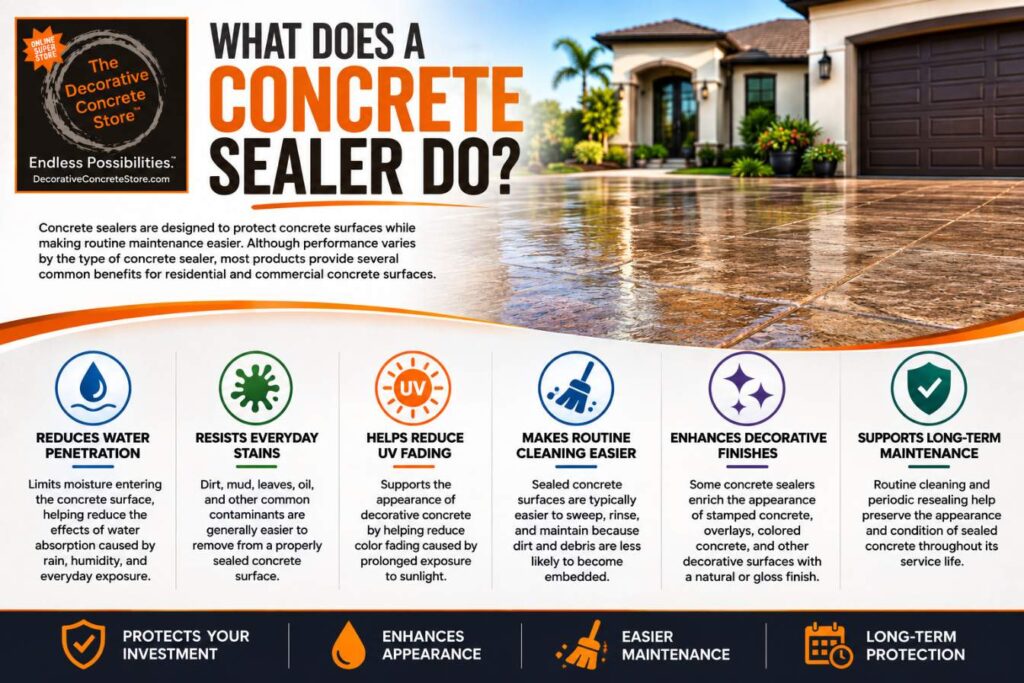
Concrete sealers are designed to protect concrete surfaces while making routine maintenance easier. Although performance varies by the type of concrete sealer, most products provide several common benefits for residential and commercial concrete surfaces.
Reduces Water Penetration
Limits moisture entering the concrete surface, helping reduce the effects of water absorption caused by rain, humidity, and everyday exposure.
Resists Everyday Stains
Dirt, mud, leaves, oil, and other common contaminants are generally easier to remove from a properly sealed concrete surface, making routine cleaning more manageable.
Helps Reduce UV Fading
Supports the appearance of decorative concrete by helping reduce color fading caused by prolonged exposure to sunlight.
Makes Routine Cleaning Easier
Sealed concrete surfaces are typically easier to sweep, rinse, and maintain because dirt and debris are less likely to become embedded in the surface.
Enhances Decorative Finishes
Some concrete sealers enrich the appearance of stamped concrete, decorative concrete overlays, colored concrete, and other decorative concrete surfaces while providing either a natural-looking or gloss finish, depending on the product.
Supports Long-Term Maintenance
Routine cleaning and periodic resealing help preserve the appearance and condition of sealed concrete throughout its service life.
What Types of Concrete Can Be Sealed?
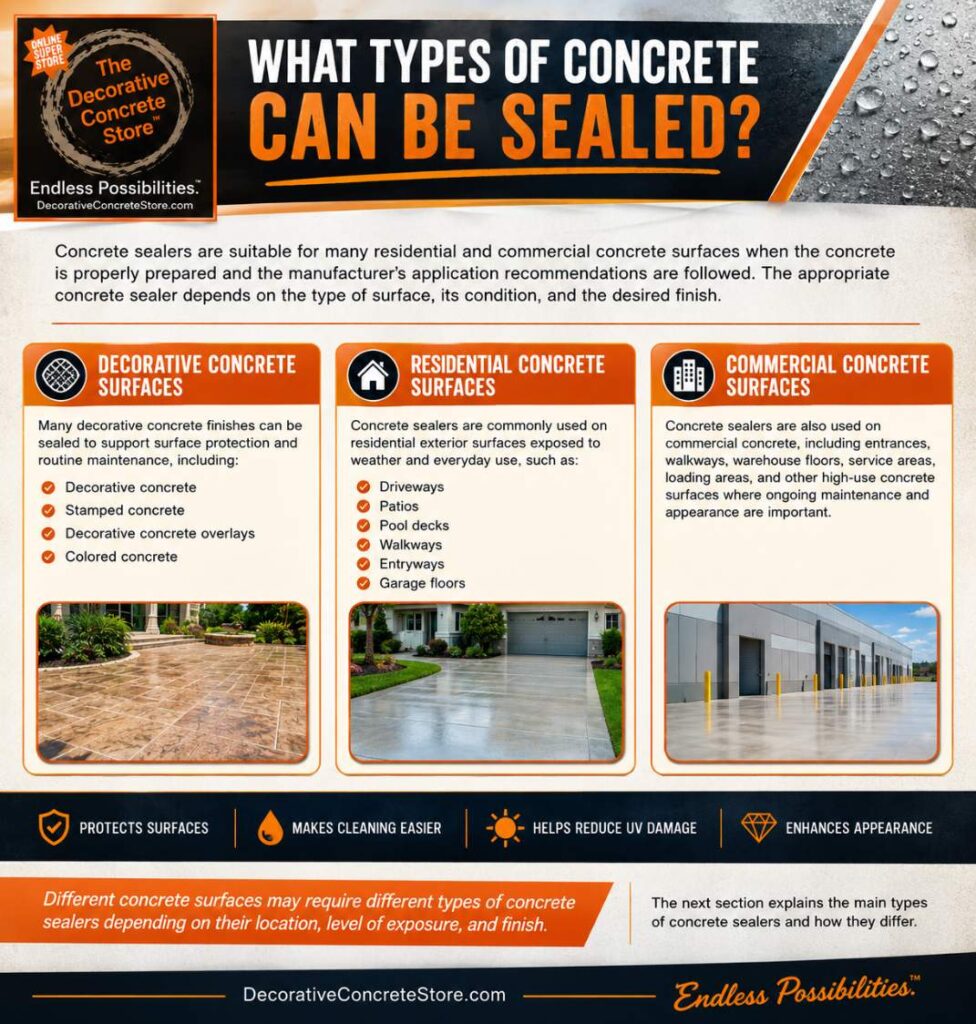
Concrete sealers are suitable for many residential and commercial concrete surfaces when the concrete is properly prepared and the manufacturer’s application recommendations are followed. The appropriate concrete sealer depends on the type of surface, its condition, and the desired finish.
Decorative Concrete Surfaces
Many decorative concrete finishes can be sealed to support surface protection and routine maintenance, including:
- Decorative concrete
- Stamped concrete
- Decorative concrete overlays
- Colored concrete
Residential Concrete Surfaces
Concrete sealers are commonly used on residential exterior surfaces exposed to weather and everyday use, such as:
- Driveways
- Patios
- Pool decks
- Walkways
- Entryways
- Garage floors
Commercial Concrete Surfaces
Concrete sealers are also used on commercial concrete, including entrances, walkways, warehouse floors, service areas, loading areas, and other high-use concrete surfaces where ongoing maintenance and appearance are important.
Different concrete surfaces may require different types of concrete sealers depending on their location, level of exposure, and the desired finish. The next section explains the main types of concrete sealers and how they differ.
What Types of Concrete Sealers Are Available?
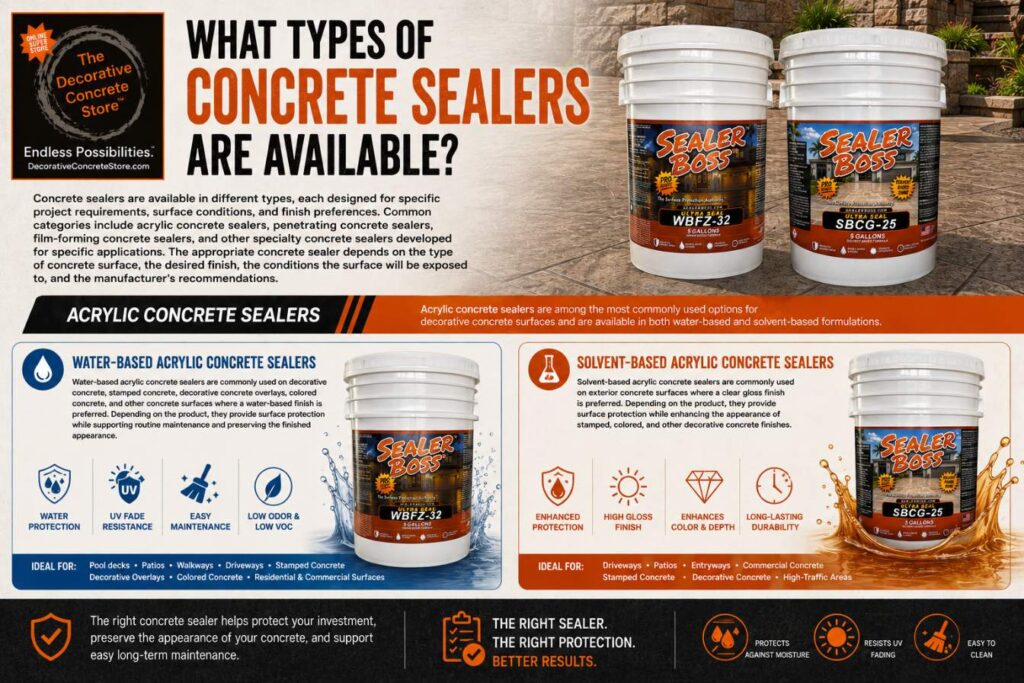
Concrete sealers are available in different types, each designed for specific project requirements, surface conditions, and finish preferences. Common categories include acrylic concrete sealers, penetrating concrete sealers, film-forming concrete sealers, and other specialty concrete sealers developed for specific applications. The appropriate concrete sealer depends on the type of concrete surface, the desired finish, the conditions the surface will be exposed to, and the manufacturer’s recommendations.
Acrylic concrete sealers are among the most commonly used options for decorative concrete surfaces and are available in both water-based and solvent-based formulations.
Water-Based Acrylic Concrete Sealers
Water-based acrylic concrete sealers are commonly used on decorative concrete, stamped concrete, decorative concrete overlays, colored concrete, and other concrete surfaces where a water-based finish is preferred. Depending on the product, they provide surface protection while supporting routine maintenance and preserving the finished appearance.
Solvent-Based Acrylic Concrete Sealers
Solvent-based acrylic concrete sealers are commonly used on exterior concrete surfaces where a clear gloss finish is preferred. Depending on the product, they provide surface protection while enhancing the appearance of stamped, colored, and other decorative concrete finishes.
Looking for help deciding between these options? Our Concrete Sealer Buying Guide explains when each sealer technology is commonly used and what to compare before buying.
How Do You Choose the Right Concrete Sealer?
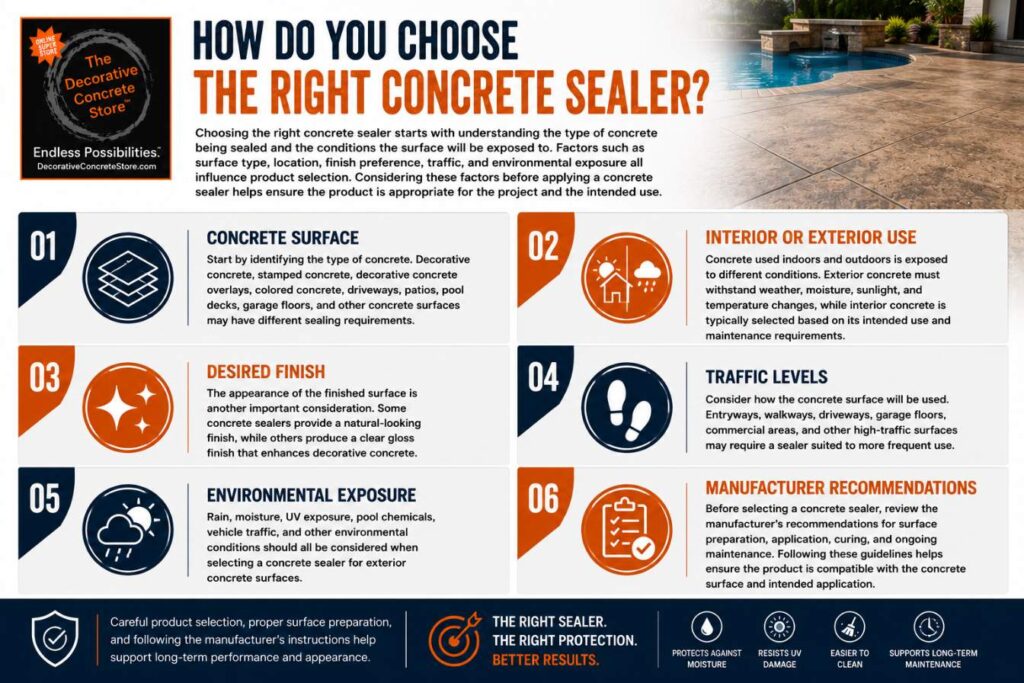
Choosing the right concrete sealer starts with understanding the type of concrete being sealed and the conditions the surface will be exposed to. Factors such as surface type, location, finish preference, traffic, and environmental exposure all influence product selection. Considering these factors before applying a concrete sealer helps ensure the product is appropriate for the project and the intended use.
Concrete Surface
Start by identifying the type of concrete. Decorative concrete, stamped concrete, decorative concrete overlays, colored concrete, driveways, patios, pool decks, garage floors, and other concrete surfaces may have different sealing requirements.
Interior or Exterior Use
Concrete used indoors and outdoors is exposed to different conditions. Exterior concrete must withstand weather, moisture, sunlight, and temperature changes, while interior concrete is typically selected based on its intended use and maintenance requirements.
Desired Finish
The appearance of the finished surface is another important consideration. Some concrete sealers provide a natural-looking finish, while others produce a clear gloss finish that enhances decorative concrete.
Traffic Levels
Consider how the concrete surface will be used. Entryways, walkways, driveways, garage floors, commercial areas, and other high-traffic surfaces may require a sealer suited to more frequent use.
Environmental Exposure
Rain, moisture, UV exposure, pool chemicals, vehicle traffic, and other environmental conditions should all be considered when selecting a concrete sealer for exterior concrete surfaces.
Manufacturer Recommendations
Before selecting a concrete sealer, review the manufacturer’s recommendations for surface preparation, application, curing, and ongoing maintenance. Following these guidelines helps ensure the product is compatible with the concrete surface and intended application.
When Should Concrete Be Sealed?
The appropriate time to seal concrete depends on the type of concrete, the condition of the surface, and the manufacturer’s recommendations for the selected product. Applying a concrete sealer after the surface is properly prepared helps support surface protection and ongoing maintenance.
New Concrete
New concrete is typically sealed after it has cured according to the sealer manufacturer’s recommendations.
Decorative Concrete
Stamped concrete, decorative concrete overlays, colored concrete, and other decorative concrete surfaces are generally sealed after the decorative finish has been completed and the surface is ready for sealing.
Newly Resurfaced Concrete
Concrete resurfacing systems are commonly sealed after the resurfaced surface has cured according to the manufacturer’s recommendations.
Existing Concrete
Existing concrete can often be sealed after the surface has been cleaned, properly prepared, and any necessary repairs have been completed.
Manufacturer Recommendations
Before applying a concrete sealer, review the manufacturer’s recommendations for curing, surface preparation, application, and maintenance to confirm the product is suitable for the intended concrete surface.
How Long Does a Concrete Sealer Last?
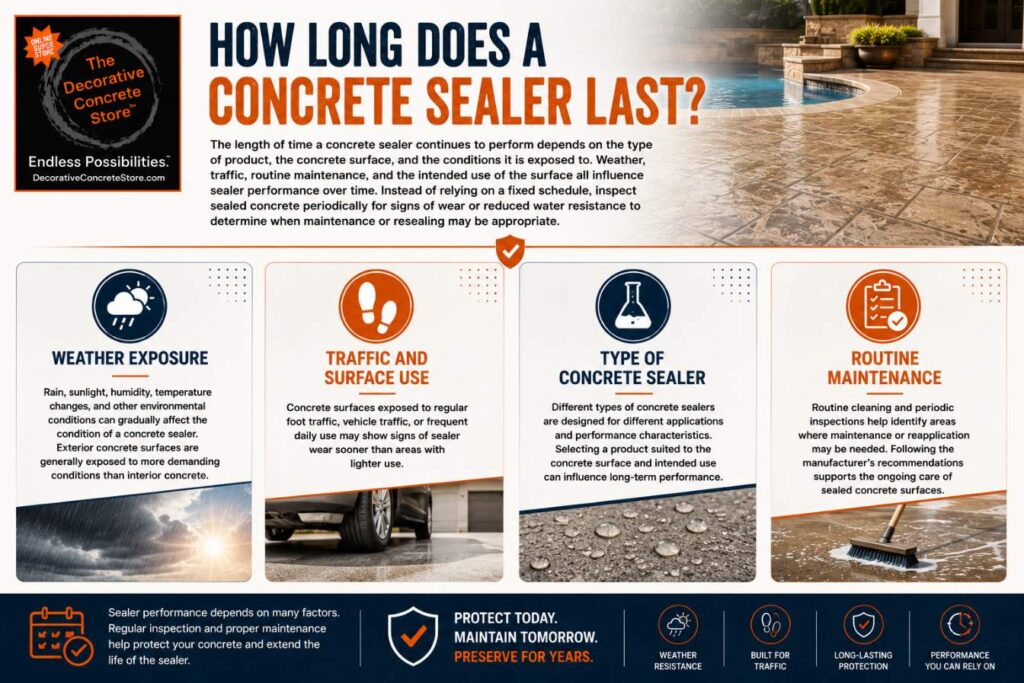
The length of time a concrete sealer continues to perform depends on the type of product, the concrete surface, and the conditions it is exposed to. Weather, traffic, routine maintenance, and the intended use of the surface all influence sealer performance over time. Instead of relying on a fixed schedule, inspect sealed concrete periodically for signs of wear or reduced water resistance to determine when maintenance or resealing may be appropriate.
Weather Exposure
Rain, sunlight, humidity, temperature changes, and other environmental conditions can gradually affect the condition of a concrete sealer. Exterior concrete surfaces are generally exposed to more demanding conditions than interior concrete.
Traffic and Surface Use
Concrete surfaces exposed to regular foot traffic, vehicle traffic, or frequent daily use may show signs of sealer wear sooner than areas with lighter use.
Type of Concrete Sealer
Different types of concrete sealers are designed for different applications and performance characteristics. Selecting a product suited to the concrete surface and intended use can influence long-term performance.
Routine Maintenance
Routine cleaning and periodic inspections help identify areas where maintenance or reapplication may be needed. Following the manufacturer’s recommendations supports the ongoing care of sealed concrete surfaces.
Common Mistakes When Choosing a Concrete Sealer
Choosing a concrete sealer involves more than selecting a product. The type of concrete, surface preparation, application timing, and expected use all influence the final result. Understanding a few common mistakes can help you choose a concrete sealer that is appropriate for your project.
Choosing a Sealer That Doesn’t Match the Surface
Different concrete surfaces have different sealing requirements. Decorative concrete, stamped concrete, decorative concrete overlays, colored concrete, driveways, patios, pool decks, and garage floors should be matched with a concrete sealer designed for the surface and its intended use.
Overlooking Surface Preparation
Concrete should be clean, dry, and properly prepared before sealing. Dirt, previous coatings, moisture, and other surface contaminants can affect sealer performance.
Selecting the Wrong Finish
Some projects are better suited to a natural-looking finish, while others may call for a clear gloss finish. Selecting a finish that complements the concrete surface and the overall design helps achieve the desired appearance.
Applying the Sealer Too Early
New concrete and newly resurfaced concrete should be sealed only after the surface has cured according to the manufacturer’s recommendations. Applying a concrete sealer before the surface is ready may affect the finished result.
Skipping Routine Maintenance
Sealed concrete benefits from routine cleaning, periodic inspections, and resealing when appropriate. Following the manufacturer’s maintenance recommendations helps preserve the appearance and condition of the concrete surface over time.
Frequently Asked Questions
What is a concrete sealer?
A concrete sealer is a protective treatment applied to concrete surfaces to help reduce the effects of moisture, weather exposure, stains, and everyday wear. Depending on the product, it may also preserve the appearance of decorative concrete while supporting routine maintenance.
Why should concrete be sealed?
Concrete is sealed to help reduce water penetration, resist stains, support routine maintenance, and preserve the appearance of surfaces exposed to weather, sunlight, and everyday use.
What types of concrete can be sealed?
Many residential and commercial concrete surfaces can be sealed, including decorative concrete, stamped concrete, decorative concrete overlays, colored concrete, driveways, patios, pool decks, walkways, entryways, and garage floors.
What types of concrete sealers are available?
Water-based concrete sealers and solvent-based concrete sealers are two common categories used on decorative concrete. The appropriate product depends on the concrete surface, the desired finish, and the manufacturer’s recommendations.
How do I choose a concrete sealer?
Start by considering the type of concrete being sealed, whether the surface is indoors or outdoors, the desired finish, traffic levels, environmental exposure, and the manufacturer’s recommendations for the selected product.
When should concrete be sealed?
Concrete is generally sealed after the surface has been properly prepared and is ready for sealing. New concrete, decorative concrete, and resurfaced concrete should be sealed according to the manufacturer’s curing and application recommendations.
How often should concrete be resealed?
Resealing intervals vary depending on the type of concrete sealer, weather exposure, traffic, surface use, and routine maintenance. Periodic inspections can help determine when maintenance or resealing may be appropriate.
Does a concrete sealer change the appearance of concrete?
Yes. Some concrete sealers provide a natural-looking finish, while others produce a clear gloss finish that enhances the appearance of the concrete surface.
Can decorative concrete be sealed
Yes. Decorative concrete, including stamped concrete, decorative concrete overlays, and colored concrete, can generally be sealed after proper surface preparation and curing.
Are concrete sealers suitable for residential and commercial projects?
Yes. Concrete sealers are used on a wide range of residential and commercial concrete surfaces, including driveways, patios, pool decks, walkways, entryways, garage floors, and commercial concrete areas exposed to everyday use.
Concrete Sealer Options
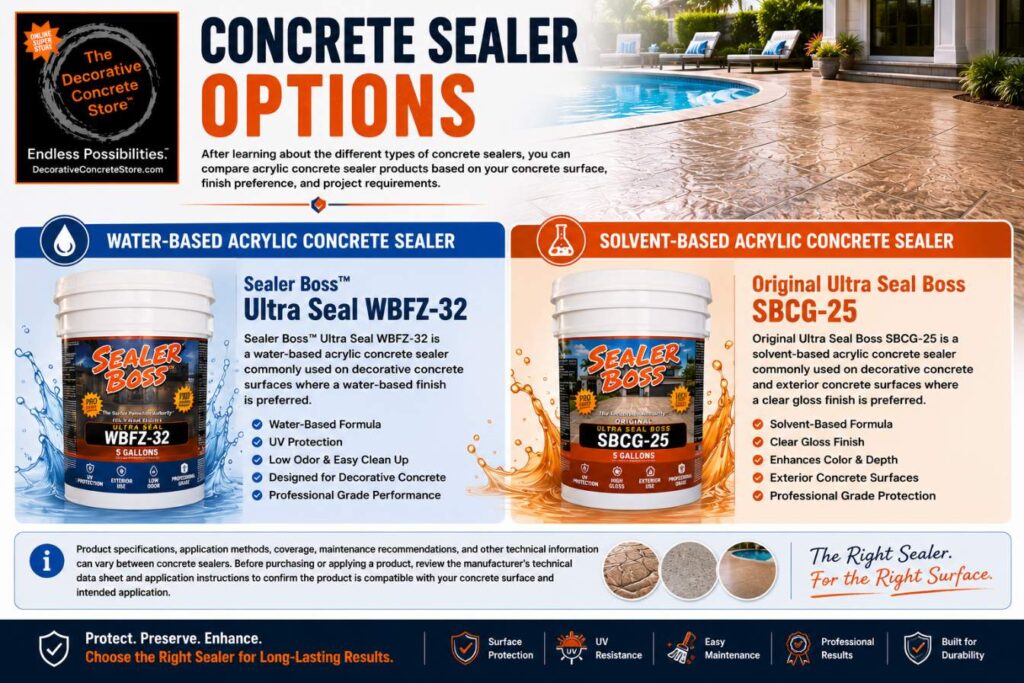
After learning about the different types of concrete sealers, you can compare acrylic concrete sealer products based on your concrete surface, finish preference, and project requirements.
Water-Based Acrylic Concrete Sealer
Sealer Boss™ Ultra Seal WBFZ-32
Sealer Boss™ Ultra Seal WBFZ-32 is a water-based acrylic concrete sealer commonly used on decorative concrete surfaces where a water-based finish is preferred.
Solvent-Based Acrylic Concrete Sealer
Original Ultra Seal Boss SBCG-25
Original Ultra Seal Boss SBCG-25 is a solvent-based acrylic concrete sealer commonly used on decorative concrete and exterior concrete surfaces where a clear gloss finish is preferred.
Product specifications, application methods, coverage, maintenance recommendations, and other technical information can vary between concrete sealers. Before purchasing or applying a product, review the manufacturer’s technical data sheet and application instructions to confirm the product is compatible with your concrete surface and intended application.
What Should You Consider Before Choosing a Concrete Sealer?
Choosing a concrete sealer begins with understanding the concrete surface and the conditions it will be exposed to. Surface type, weather exposure, traffic levels, the desired finish, and ongoing maintenance all play a role in selecting a product that matches the intended application.
If you’d like to explore the topic further, continue with our related buying guides covering concrete sealer selection, water-based and solvent-based concrete sealers, finish options, and concrete sealer coverage. You can also browse our Concrete Sealers category to compare water-based and solvent-based acrylic concrete sealer products for a variety of decorative concrete applications.
Explore the full range of decorative concrete products, acrylic concrete sealers, and expert buying guides available from The Decorative Concrete Store to help you choose products for your next project.