Choose the right concrete sealer by matching the product to your concrete surface, how the area will be used, the conditions it will face, and the appearance you want to achieve. There isn’t a single concrete sealer that’s the best choice for every project. A product that’s well suited to a stamped concrete patio may not be the right option for a driveway, pool deck, garage floor, or decorative concrete overlay.
This guide follows the same decision process many professionals use when selecting a concrete sealer—from identifying the concrete surface to comparing products within the right sealer category. If you’re new to concrete sealers, read What Is a Concrete Sealer? to understand the basics. For a detailed comparison of sealer technologies, finishes, performance characteristics, and product specifications, see our Concrete Sealer Buying Guide.
Step 1: Identify the Concrete Surface You’re Sealing
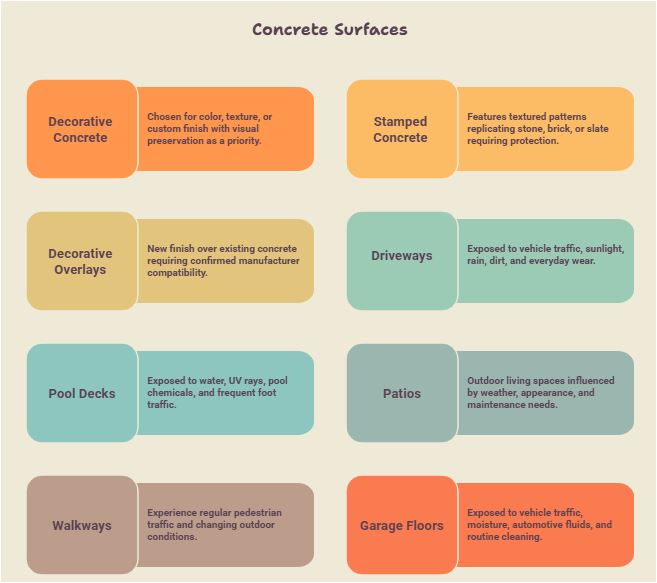
The type of concrete you’re sealing is one of the biggest factors in choosing the right concrete sealer. Each concrete surface has its own exposure conditions, appearance goals, and maintenance requirements. Identifying your project first makes it easier to narrow your options before comparing sealer technologies or individual products.
Decorative Concrete
Decorative concrete is often chosen for its color, texture, or custom finish. Preserving those visual details is usually one of the main priorities when selecting a concrete sealer.
Stamped Concrete
Stamped concrete features textured patterns that replicate materials such as stone, brick, or slate. Many homeowners want a sealer that maintains the appearance of those patterns while protecting the surface from everyday exposure.
Decorative Concrete Overlays
Decorative overlays create a new finish over existing concrete rather than replacing the slab. Because overlay systems differ between manufacturers, compatibility should always be confirmed before selecting a concrete sealer.
If the concrete has already been sealed, verify that the new concrete sealer is compatible with the existing sealer before applying it. Applying an incompatible product can affect adhesion, appearance, and long-term performance.
Driveways
Driveways are exposed to vehicle traffic, sunlight, rain, dirt, and everyday wear. These conditions influence the level of protection many homeowners look for when choosing a concrete sealer.
Pool Decks
Pool decks are continually exposed to water, UV rays, pool chemicals, and frequent foot traffic. These conditions often make both durability and the finished appearance important considerations.
Patios
Patios are outdoor living spaces used for relaxing, entertaining, and everyday activities. Weather exposure, surface appearance, and ongoing maintenance all influence the type of concrete sealer that may be suitable.
Walkways
Walkways and entryways experience regular pedestrian traffic while remaining exposed to changing outdoor conditions. Durability, appearance, and ease of maintenance are common priorities for these surfaces.
Garage Floors
Garage floors are exposed to vehicle traffic, moisture, automotive fluids, and routine cleaning. Understanding how the space is used helps determine the level of protection the concrete surface requires.
Step 2: Consider How the Surface Will Be Used
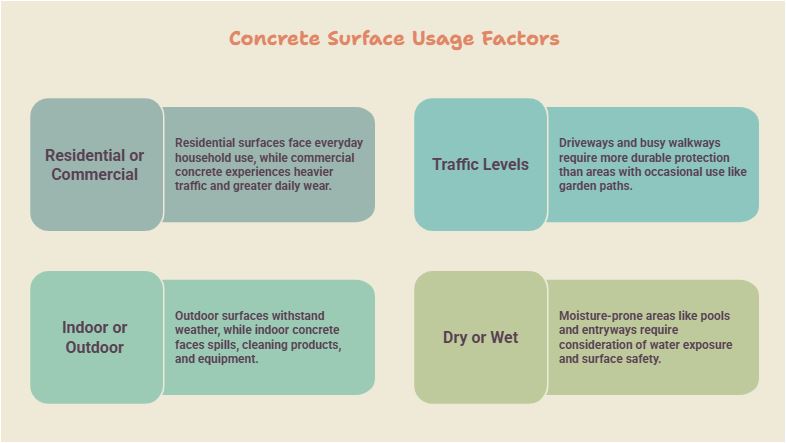
How the concrete is used has a direct impact on the type of concrete sealer you should choose. A lightly used residential patio has different requirements than a busy commercial walkway or a garage floor exposed to vehicles every day. Think about how the area is used before narrowing your options. Consider traffic levels, environmental exposure, and the level of protection the surface requires.
Residential or Commercial Use
Start by considering where the concrete is located. Residential surfaces are typically exposed to everyday household use, while commercial concrete often experiences heavier traffic, more frequent cleaning, and greater daily wear. Understanding the intended use helps narrow your options before comparing concrete sealers.
Light or Heavy Traffic
Traffic levels influence how much wear a concrete surface experiences over time. Driveways, garage floors, commercial entrances, and busy walkways generally require more durable protection than patios, garden paths, or other areas with occasional use. Think about how often people or vehicles use the surface throughout the year.
Indoor or Outdoor Conditions
Indoor and outdoor concrete are exposed to different environments. Outdoor surfaces must withstand sunlight, rain, moisture, and changing weather, while indoor concrete may be exposed to spills, cleaning products, equipment, or continuous daily use. Consider the conditions your concrete faces before selecting a sealer.
If you’re sealing newly poured concrete, confirm that it has cured for the period recommended by the manufacturer before applying a concrete sealer. Existing concrete may require cleaning, repairs, or surface preparation before sealing, depending on its condition.
Dry or Wet Areas
Concrete located around pools, outdoor kitchens, entryways, or other moisture-prone areas is exposed to water more frequently than dry surfaces. If the concrete regularly gets wet, moisture exposure and surface safety should be considered alongside appearance and long-term durability.
Step 3: Decide What Matters Most
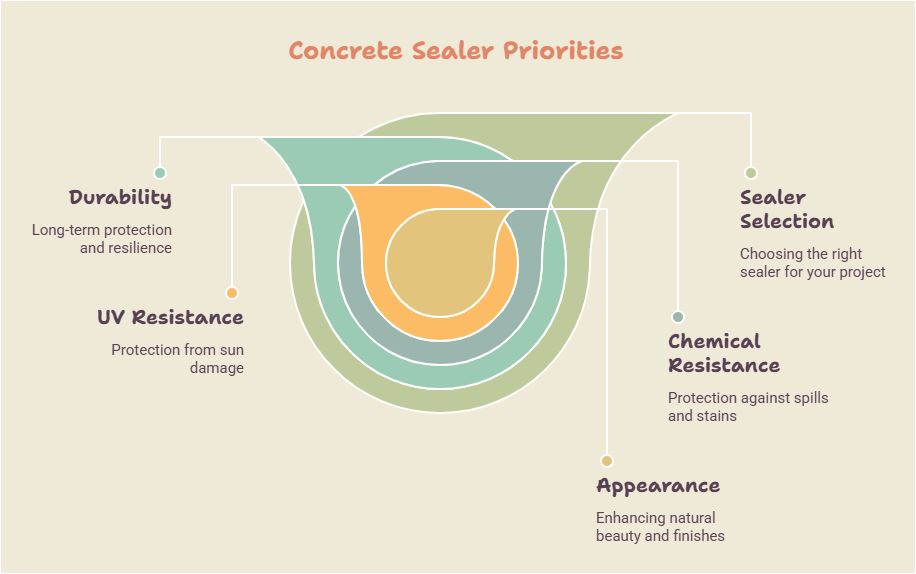
Every concrete project has different priorities, so there isn’t one concrete sealer that’s right for every situation. Before comparing products, decide which characteristics matter most for your project. Your answers will help narrow the range of suitable concrete sealers and make the final decision much easier.
Ask yourself the following questions:
- Do you want to preserve the concrete’s natural appearance?
- Do you want to enhance color or decorative finishes?
- Is stain resistance important for the way the surface will be used?
- Will the concrete be exposed to frequent sunlight and UV rays?
- Does the surface need to reduce water absorption?
- Will the area benefit from additional slip resistance when wet?
- Is long-term durability more important than appearance?
- Will the concrete be exposed to automotive fluids, cleaning products, or other chemicals?
You don’t need every performance feature for every project. A decorative patio may place greater importance on appearance, while a garage floor may prioritize durability and chemical resistance. Identifying your priorities now makes it easier to match your project with the most appropriate type of concrete sealer in the next step.
Step 4: Choose the Right Type of Concrete Sealer
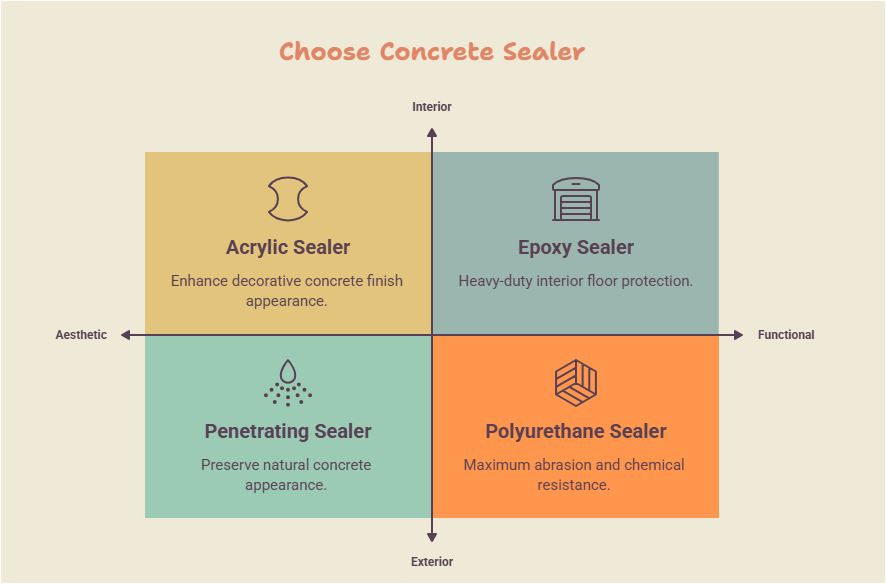
Choose the type of concrete sealer that best matches your project’s priorities. If your goal is to enhance decorative finishes, preserve the concrete’s natural appearance, or improve durability in demanding environments, different sealer technologies are better suited to different project requirements. Start by identifying the category that best matches your project, then compare products within that category.
| If Your Project Prioritizes… | Commonly Consider… |
| Enhancing decorative finishes | Acrylic Concrete Sealer |
| Preserving the natural appearance of concrete | Penetrating Concrete Sealer |
| Heavy-duty interior floor protection | Epoxy Concrete Sealer |
| Maximum abrasion and chemical resistance | Polyurethane Concrete Sealer |
When to Choose an Acrylic Concrete Sealer
Choose an acrylic concrete sealer when enhancing the appearance of decorative concrete is one of your main priorities. Acrylic sealers are commonly used on stamped concrete, decorative overlays, patios, pool decks, and other surfaces where color enhancement and finish options are important.
When to Choose a Penetrating Concrete Sealer
Choose a penetrating concrete sealer when preserving the concrete’s natural appearance is more important than adding color or gloss. They are commonly selected for driveways, sidewalks, walkways, and other plain concrete surfaces where moisture protection is a priority.
When to Choose an Epoxy Concrete Sealer
Choose an epoxy concrete sealer for interior concrete floors exposed to regular vehicle traffic, equipment, or heavy use. They are commonly selected for garage floors, workshops, warehouses, and similar environments where durability is a primary concern.
When to Choose a Polyurethane Concrete Sealer
Choose a polyurethane concrete sealer when long-term abrasion, stain, and chemical resistance are among your highest priorities. They are commonly used on commercial floors, showrooms, garage floors, and other demanding concrete surfaces.
Once you’ve identified the type of concrete sealer that best matches your project, compare products within that category based on their intended applications, finish options, product specifications, and the manufacturer’s recommendations before making your final decision.
Step 5: Compare Products Within the Same Sealer Category
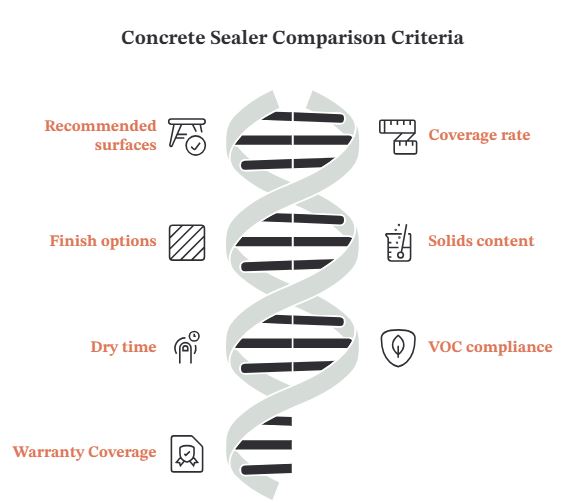
Not every acrylic, penetrating, epoxy, or polyurethane concrete sealer performs the same. After choosing the right sealer technology, compare similar products before making your final decision. Differences in coverage, finish options, application requirements, and warranty can influence which product is the better fit for your project.
When comparing products within the same sealer category, review:
- Recommended surfaces — Confirm the product is intended for the concrete you’re sealing.
- Coverage rate — Compare the published coverage rate to estimate material requirements.
- Finish options — Check whether natural, matte, satin, gloss, or wet-look finishes are available.
- Solids content — Compare products within the same category to understand differences in film build or finish.
- Dry time — Review drying and recoating times before planning the project.
- VOC compliance — Verify the product meets local VOC requirements where applicable.
- Warranty Coverage — Compare warranty terms and any conditions that apply.
Before buying, confirm the product is compatible with your concrete surface, review the Technical Data Sheet (TDS), and follow the manufacturer’s application recommendations.
Frequently Asked Questions
Which concrete sealer should I choose for my driveway?
Choose a concrete sealer that’s recommended for driveways and the conditions your driveway faces. Compare products based on traffic, weather exposure, the appearance you want, and the level of protection your project requires.
Should I prioritize appearance or durability?
Prioritize the characteristic that’s most important for your project. Decorative surfaces often emphasize appearance, while garage floors, driveways, and commercial concrete typically place greater importance on durability.
Can I use the same concrete sealer on multiple surfaces?
Sometimes. Some concrete sealers are suitable for multiple surfaces, while others are designed for specific applications. Always confirm the manufacturer’s recommended uses before applying the same product to different concrete surfaces.
How do I compare two similar concrete sealers?
Compare products within the same category by reviewing their recommended applications, finish options, coverage rate, solids content, dry time, VOC compliance, warranty, and Technical Data Sheet (TDS).
When should I choose a penetrating concrete sealer instead of an acrylic concrete sealer?
Choose a penetrating concrete sealer when preserving the concrete’s natural appearance is your priority. If you want to enhance decorative finishes or add color depth and sheen, an acrylic concrete sealer is often the better choice.
Is a more expensive concrete sealer always better?
No. The best concrete sealer is the one that matches your concrete surface, performance priorities, and application requirements. Price alone doesn’t determine suitability.
What should I verify before buying a concrete sealer?
Before buying, confirm the product is compatible with your concrete surface, intended for the environment where it will be used, and supported by the manufacturer’s Technical Data Sheet (TDS).
How do I know if a concrete sealer is compatible with my surface?
Review the manufacturer’s recommended applications and verify that the product is intended for your concrete surface. If you’re sealing a decorative overlay, confirm compatibility with both the overlay and sealer manufacturers.
Conclusion
Choosing the right concrete sealer doesn’t begin with selecting a product—it begins with understanding your project. Once you’ve identified the concrete surface, considered how it will be used, and selected the right sealer technology, comparing products becomes a much simpler process.
If you’d like to learn more about concrete sealer technologies, finishes, performance characteristics, and product specifications, explore our Concrete Sealer Buying Guide. Once you’ve narrowed your options, browse our collection of professional-grade concrete sealers to find a product that’s suited to your project.
Explore More Decorative Concrete Products
Ready to start your project? Browse The Decorative Concrete Store for professional-grade concrete sealers, concrete repair materials, surface preparation products, decorative coatings, and concrete polishing supplies designed for residential and commercial concrete projects.